
Cabinet Overlay Guide: How to Measure, Choose, and Get the Right Fit
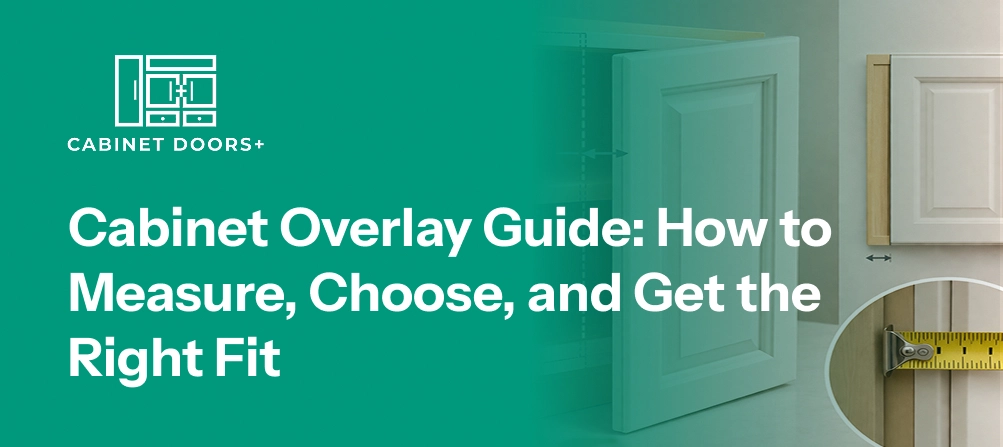
When remodeling your kitchen or bathroom, one small decision can completely change the look of your space: your cabinet overlay.
But overlay is more than just a design choice. It affects how your doors fit, how your cabinets function, and whether your installation goes smoothly.
What Is A Cabinet Overlay
Cabinet overlay refers to how much of the cabinet frame is covered by the door when it is closed.
The cabinet frame itself does not change. The only things that change are the door size and the hinge used.
Cabinet overlay determines:
- How much of the frame you see
- The overall style of your cabinets
- Which hinges will work with your setup
In simple terms, overlay is how your cabinet door sits on the cabinet frame.
How to Measure Your Overlay
If you are unsure what size overlay your cabinets use, there are two reliable ways to find out.
Option 1: Measure your current overlay
Measure how much your cabinet door overlaps the frame when it is closed.
Option 2: Check your hinges
If you are using Blum soft close hinges, the model number on the hinge can help identify your overlay.
We also provide a step by step DIY guide to help you measure accurately before ordering.
Understanding Overlay Sizes
Overlay sizes determine how much of the cabinet frame is covered by the door.
Think of it this way:
- Smaller overlay means more frame showing
- Larger overlay means less frame showing Common overlay sizes include:
3/8 inch and 1/2 inch
- Minimal door coverage
- More frame visible
- Common in older or traditional cabinets
5/8 inch and 3/4 inch
- Moderate coverage
- Some frame still visible
- Transitional appearance
1 inch, 1 1/4 inch, and 1 1/2 inch
- Maximum coverage
- Very little frame visible
- Tight spacing and modern appearance
At Cabinet Doors Plus, common overlay options include 3/8 inch, 1/2 inch, 3/4 inch, and 1 1/4 inch.
Each size represents how far the door overlaps the cabinet frame.
Why Overlay Matters
Overlay directly impacts how your cabinets look and function.
- It determines how much of the frame is visible
- It affects spacing and alignment between doors
- It dictates which hinges will work with your cabinet Choosing the correct overlay ensures your doors:
- Align properly
- Open and close smoothly
- Maintain consistent spacing across your cabinets Choosing the wrong overlay can lead to:
- Overlapping doors
- Uneven gaps
- Installation issues
The Key Takeaway
Overlay defines both the appearance and performance of your cabinets.
Getting it right means understanding your cabinet setup, selecting the correct hinge, and choosing the right overlay size before ordering.
If you are unsure, measuring carefully or matching your existing hinges is the best place to start.
If you are ordering replacement cabinet doors, this is one of the most important steps in the process. Our guides and team are here to help you get it right the first time.