
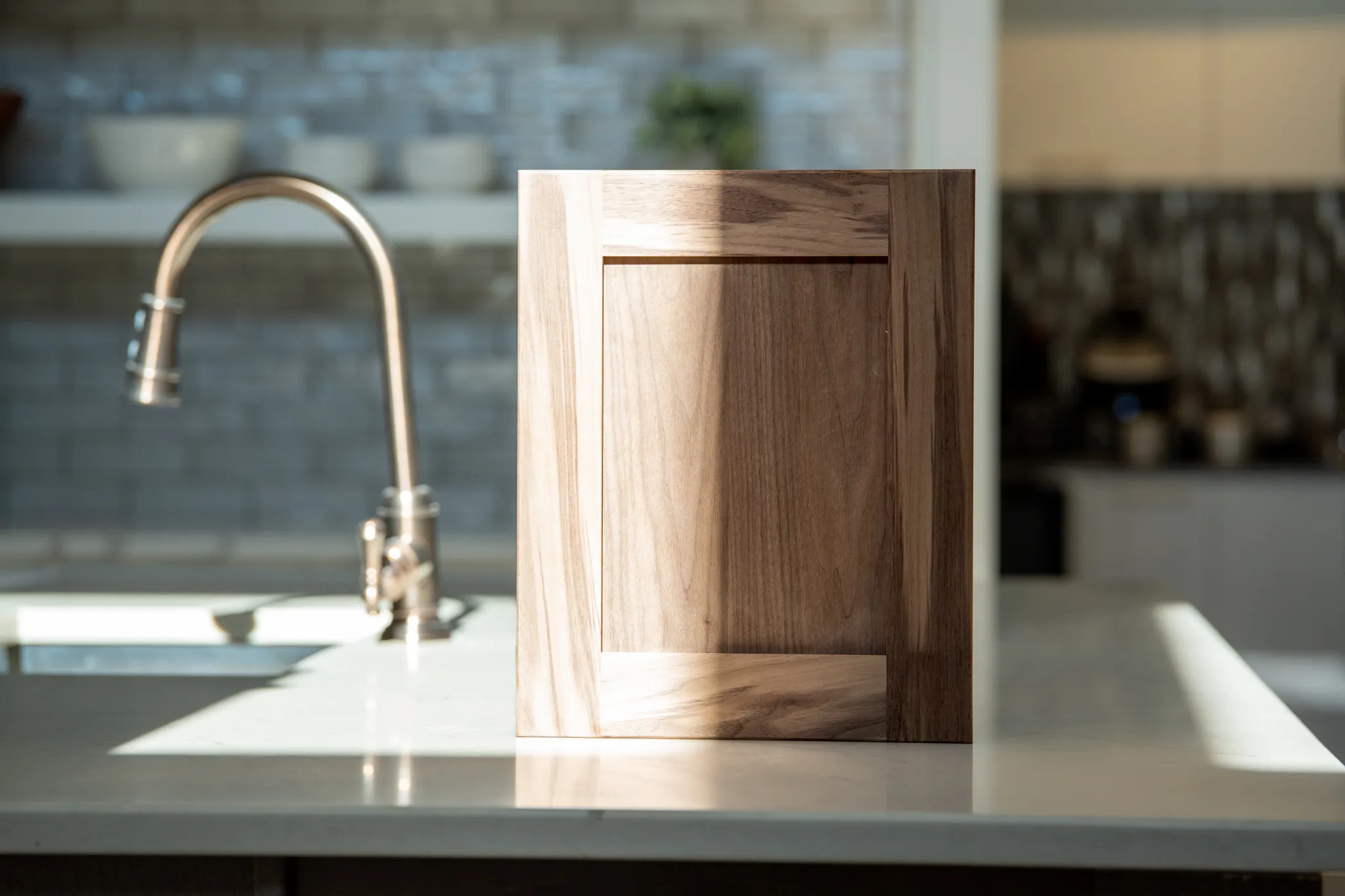
Wood is a natural material, and natural materials vary. That’s not a flaw in the product, it’s the nature of what the client is buying. But if nobody explains that before the doors show up, “the wood looks different than the sample” turns into a call you didn’t need to get.
This is one of the easiest client conversations to get ahead of. It takes two minutes during selection, and it saves you a much longer conversation after install.
Why Wood Varies
Every board comes from a different tree, cut from a different section of that tree, with its own grain pattern, mineral content, and exposure to light before it ever reached a mill. Two doors cut from the same species, finished with the same stain, can still read slightly differently side by side. That’s not inconsistency. It’s what makes it real wood instead of a printed panel.
Grain pattern affects how a door looks. Color affects how it looks. And with some species, color continues to shift after installation as the wood is exposed to light. None of that is a defect. It’s the material doing what that species does.
What This Means for Samples
A sample shows a client the character of a species: its grain, its general color family, how it takes a stain or paint. It is not a guarantee that their doors will match that exact piece of wood. Setting that expectation up front, before they fall in love with one specific sample board, is what keeps the conversation calm later.
The sample rule
A sample shows the grain and color family, not a guarantee of an exact match on every door.
Paint Grade vs. Stain Grade, in Plain Terms
The species a client picks should follow from how they plan to finish it, not the other way around.
Paint
Species with tight, uniform grain, like Maple, take paint cleanly because there’s little grain texture to telegraph through the finish. Maple Paint Grade, which pairs a solid maple frame with a smooth engineered center panel, is built specifically for paint. It’s the most consistent, uniform option offered, because a painted panel isn’t meant to show wood character at all.
Stain
Species with pronounced grain and color, like Cherry, Walnut, Red Oak, White Oak, and White Oak Rift Cut, are chosen because the client wants the wood to show. Painting over that grain defeats the reason to choose the species in the first place, so these are almost always stained or clear-finished instead.
Once a client understands that split, the rest of the conversation gets easier: paint for a clean, uniform look, or stain for a look that shows the material.
One Thing Worth Mentioning Up Front
Some species keep changing after the doors are installed. Cherry is the clearest example: it deepens and darkens with light exposure over the following months, so the tone a client sees on install day is not the tone they’ll have a year later. That’s normal, not a finish problem, but it’s much easier for a client to hear before it happens than to explain after they’ve noticed their cabinets looking different from the photos on your website.
A Misconception Worth Correcting
Clients sometimes read variation as a quality problem, assuming that if every door doesn’t look identical, something went wrong. It’s worth correcting directly: identical boards come from engineered materials, not trees. Wood variation is a sign the product is what it claims to be, not a sign it’s inconsistent.
The species that varies the most, Walnut, is usually the one clients choose specifically because of that range. The color depth they’re drawn to in the sample is the same trait that makes each door slightly different from the next.
How to Frame It for the Client
Script you can use
“This is real wood, so no two doors are going to be pixel-perfect matches; that’s part of what makes it wood instead of a printed panel. The sample shows you the grain and color family you’re choosing, not a guarantee of an exact match on every door.”
That framing does two things. It sets an accurate expectation, and it reframes variation as a feature of the material they picked, not a risk they’re taking on.
Bring the Comparison Sheet Into the Selection Meeting
Once a client has a general sense of paint vs. stain, walking them through each species side by side is what actually helps them choose. Use the attached comparison sheet during that conversation. It covers the species Cabinet Doors Plus offers, laid out by grain character, general tone, typical variation level, and whether it’s suited to paint or stain, so you can talk through the trade-offs with the client in the room instead of describing them from memory.
For pros · Client selection tool
Wood Species Comparison Sheet
1 page · PDF
Tone reflects general color family only; every board varies, and finish will shift the final color. Use this alongside physical samples, not in place of them.
Using this with a client
Start with paint vs. stain, then narrow by tone and variation. A client set on a uniform, low-variation look usually lands on Maple Paint Grade or Rift Cut White Oak. A client drawn to deep, varied color usually lands on Walnut or Cherry. Confirm the pick against a physical sample before it goes on the order.
Get the comparison sheet
Want This On Hand For Your Next Selection Meeting?
On this page
Professional pricing for qualifying pros